The European solar market continues to grow. According to SolarPower Europe’s latest European Market Outlook, 2025 marked another strong year for photovoltaics (PV) within the European Union. When it comes to annual expansion rates, Germany is at the top of the list, followed by Spain, France, Italy and Poland. The importance of solar energy in meeting Europe’s power needs continues to grow. At the same time, many countries are changing their subsidies and financing models, creating new challenges for investors. While regulatory instruments, such as contracts for difference (CFDs) provide a new order, the industry is responding with market-based solutions, such as hybrid PV power plants and hybrid power purchase agreements (PPAs). Intersolar Europe offers guidance: At The smarter E Europe, Europe’s largest alliance of exhibitions for the energy industry at Messe München, trade visitors can experience innovations, discuss new business models and meet project developers, manufacturers and investors from June 23–25, 2026. More than 2,800 exhibitors and over 100,000 visitors from all over the world are expected to attend in 2026.
The expansion highlights solar energy’s crucial role as a primary component of the European electricity supply. At the same time, the market is undergoing changes. Many countries are adjusting their support schemes or replacing them with market incentives – and this creates uncertainty among investors. What’s more, the actual projects are becoming increasingly complex. These factors combined drive the development of new business models and technical solutions.
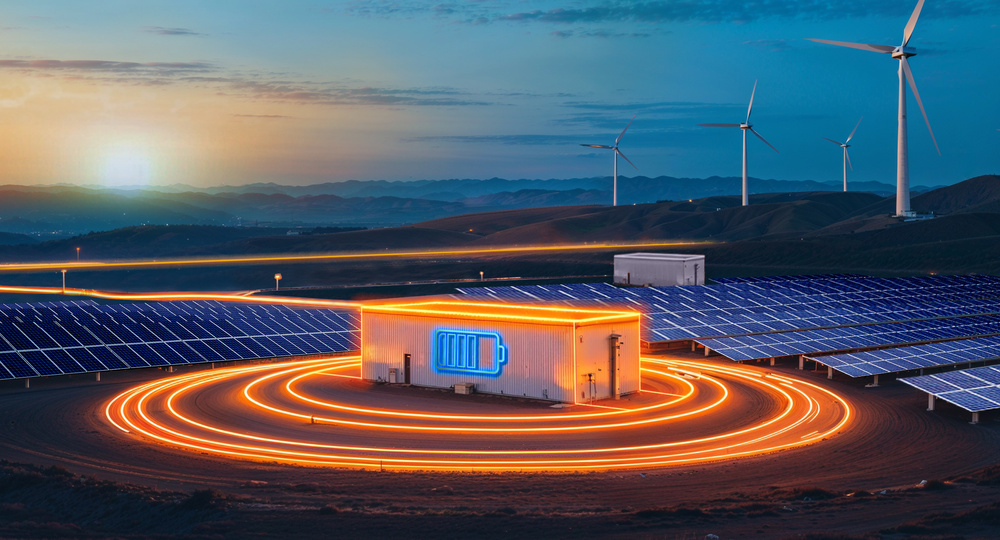
Hybrid power plants that integrate PV, wind and/or battery storage are on the rise across Europe. Driven by targeted subsidies and efficient approval processes, in the UK, the share of these types of systems is already quite high. Business models like energy arbitrage (storing electricity when the price is low and selling it when the price is high) can help make them profitable. In most cases, a mix of several business models is used (multi use). This ensures optimal operation whilst making the need for stable investment conditions obvious.
PV is now a vital part of the global power supply; Wood Mackenzie data indicates that by early 2026, cumulative worldwide PV capacity had reached nearly three terawatts. This growth creates new challenges for the power grid and for market mechanisms, such as negative prices during peak periods and a rise in redispatch measures. All of this makes large-scale storage systems a game changer because they store surplus solar power and later feed it back into the grid, contributing to more flexibility, better grid integration and more efficient utilization of the renewable energy system.
Stationary storage devices are becoming more and more profitable. According to BloombergNEF, the price of stationary storage plunged to 70 US dollars per kilowatt hour in 2025 – this is the largest drop across all battery segments. The price reductions were driven by overcapacities in cell manufacturing, fierce competition between Chinese manufacturers and the expanding use of lithium-iron-phosphate (LFP). Stationary storage devices can be combined to form hybrid PV systems, making them an integral part of the European – and the global – energy transition. They boost system stability, enable new business models and strengthen the profitability of projects under changed market conditions and new subsidy rules.
In many EU countries, CFD models have started to replace conventional feed-in tariffs. They secure yields for project developers, stabilize consumer electricity prices and include clawback features for refunding excess revenues. The system is about to be changed in Germany, too: The government-approved feed-in tariff under the Renewable Energy Sources Act (EEG) is going to be discontinued at the end of 2026. Market players fear that without the EEG feed-in tariff, securing loans for new projects is going to become more difficult, and are calling for reliable framework conditions for secure investments in Germany and across Europe.
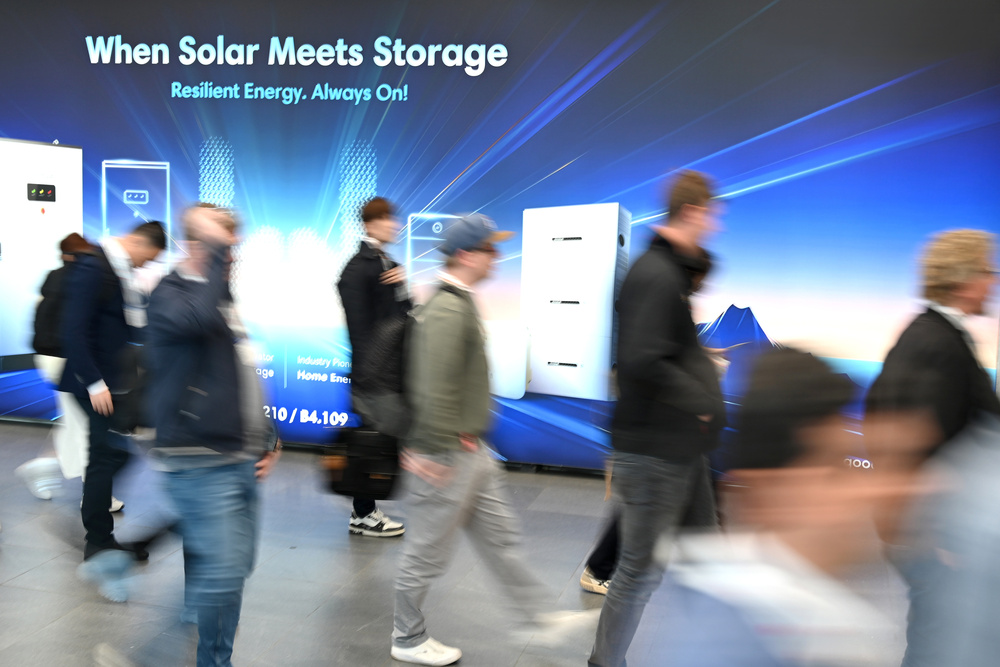
Hybrid PV power plants and new financing models will get much attention at Intersolar Europe 2026. The Intersolar Europe Conference starts on June 22, offering a high-level kickoff event for the exhibition, featuring renowned experts, strategic discussions and exclusive insights into market trends. From June 23–25, the practical implications of these topics will be discussed at the Intersolar Forum, while exhibitors will be presenting concrete solutions in the exhibition halls. Intersolar Europe will take place as part of The smarter E Europe, Europe’s largest alliance of exhibitions for the energy industry, alongside three other exhibitions, ees Europe, Power2Drive Europe and EM-Power Europe. More than 2,800 exhibitors and over 100,000 visitors from all over the world are expected to attend in 2026.