Europe is diverse, both in terms of geography and in terms of culture. And the solutions for the energy transition in the various European countries are just as diverse. The smarter E Europe regards this diversity to be an opportunity to learn from each other and to make the energy transition happen even faster and more efficient in each of the countries.
This series of articles presents innovative and successful projects from across Europe that show how a renewable 24/7 energy supply can work. The case studies should provide impulses and inspiration, turning “does not work” into “already exists”.
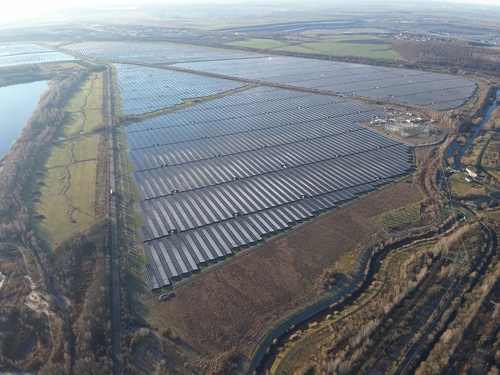
“From brown to green” – a simple way to describe the transformation of the Witznitz lignite surface mine near Leipzig. Today, on the spoil tip of the former surface mine, stands the Witznitz Energy Park, one of the largest ground-mounted photovoltaic systems in Europe, boasting an output of 650 MWp. According to the project developer and operator, Move On Energy, the plant can supply green electricity to 200,000 four-person households.
The plant is notable not only because of its size, but also because it delivers the power at extra-high voltage and helps maintain grid stability around the clock. It supplies reactive power, which the transmission system operator, 50Hertz, can use to maintain voltage stability. To do so, the 3,500 inverters in the PV park are equipped with additional software.
Reactive power is essential for operators to maintain the stability of the AC grid. The right amount of power must be injected or drawn at the right time in different parts of the grid, so the voltage stays at the desired level. Until now, large-scale power stations and their generators supplied the necessary reactive power. However, as fossil fuel power plants are being phased out in the energy transition, the number of sources of reactive power is shrinking. In the Network Development Plan Electricity (NEP), German transmission system operators estimate that the growing deficit could reach 65 Gvar by 2037. Gvar stands for “gigavolt-ampere reactive”, the unit of measurement for reactive power.
According to 50Hertz, the Witznitz Energy Park can provide 150 Mvar of reactive power, partially replacing the supply from the neighboring Lippendorf lignite-fired power plant (2 x 400 Mvar). This also works when the PV system is not generating any electricity, in which case it uses electricity from the grid to produce reactive power.
The Witznitz Energy Park spans over 500 hectares with over 1.1 million solar modules and is connected to the 380 kV overhead power lines via its own purpose-built transformer station. The plant is financed by the insurance group Signal Iduna, without any subsidies. The Shell subsidiary, Next Kraftwerke, markets a large part of the energy park’s electricity through a long term Power Purchase Agreement (PPA), including with Microsoft. The direct marketer is also responsible for monitoring and controlling the solar farm. The surrounding municipalities benefit, at least indirectly, from the PV installation on their doorstep through a foundation that invests a portion of the green energy plant’s profits into local social and cultural projects.
30 Minutes to Process a Feed-in Connection Application
Zero Bills Home: Living Without Power And Heating Costs
Plug-In Solar Devices: Anyone Can Be Part of the Energy Transition